Shadow of the Iron Tyrant
Laurendale Hamlet
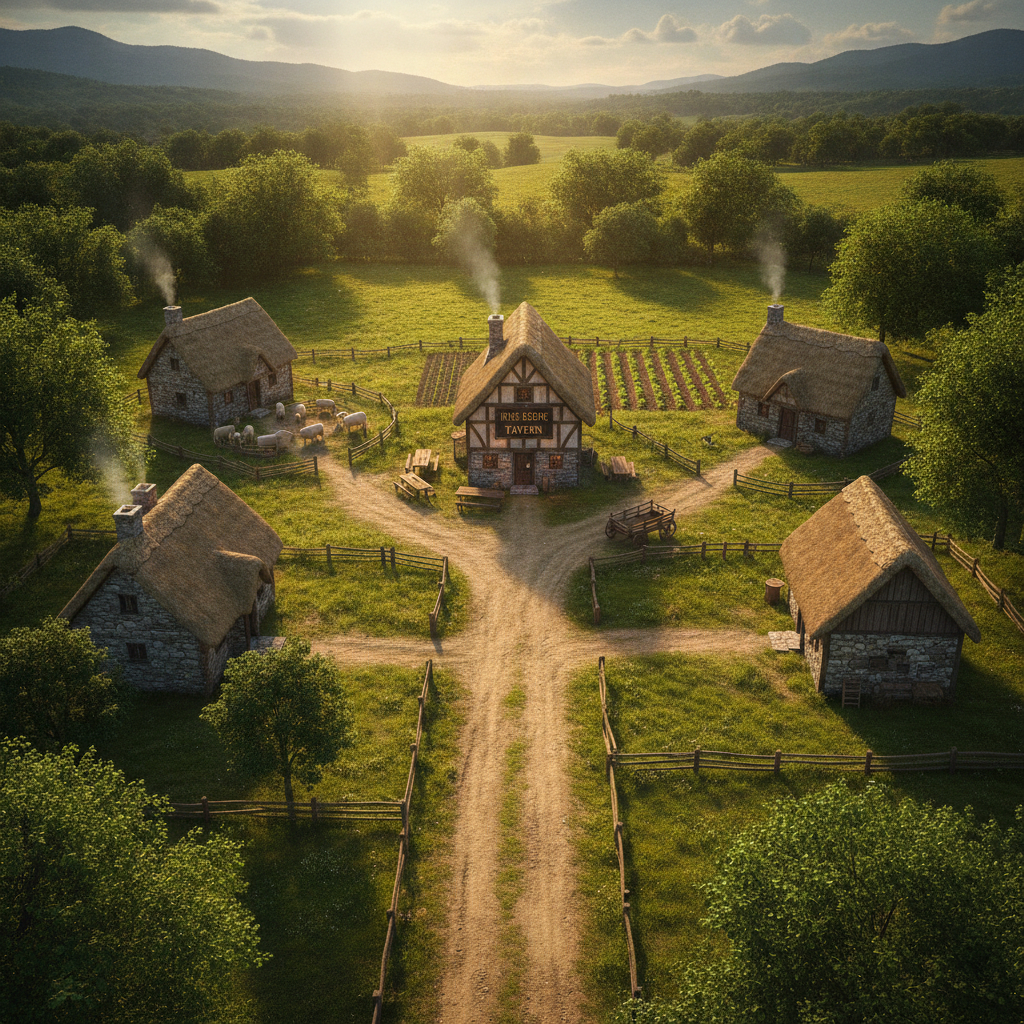 Behold, then, the humble hamlet of Laurendale, a settlement so miniscule that a casual traveler might easily pass it by, utterly oblivious to the twenty-two souls who have chosen to root their lives within its quiet confines. Nestled deep within the verdant embrace of ancient lands, it is a testament to perseverance, home to but five sturdy families whose lineage is as deeply woven into the very soil as the roots of the oldest oaks. Here dwell the sturdy farmers, their hands calloused by the ceaseless rhythm of planting and harvest, their faces etched with the wisdom of the turning seasons; here, too, is the skilled carpenter, whose deft fingers can coax beauty and utility from raw timber; and here, standing sentinel at his forge, is the capable blacksmith, whose ringing hammer is the loudest sound often heard, shaping not only metal but, perhaps, the very backbone of this tiny community.
At its heart, beating with the slow rhythm of country life, sits "The Lucky Ewe," a tavern so small it might be mistaken for a particularly stout cottage, yet within its single, smoke-warmed common room, tales are spun, local news exchanged, and weary travelers — on the rare occasion one actually stumbles upon Laurendale — can find solace and a single, surprisingly comfortable room for rent. And should one seek a flicker of hope amidst the day's toil, a humble shrine stands sentinel, a weathered edifice of stone and polished wood dedicated to Tymora, the goddess of luck, upon whose benevolent gaze the villagers cast their quiet, fervent prayers, hoping for prosperity, for safety, for the simple grace of a good harvest.
Far to the north, where the winds carry whispers of distant markets and the promise of new horizons, lies Fortune's Crossing, a burgeoning settlement whose folk, with eyes set firmly on the road, pulse with a collective ambition. They yearn, oh how they yearn, to attract a steady stream of travelers, hoping that the passage of coin and conversation might one day swell their nascent hamlet into a thriving town, a beacon of commerce in these sparsely tread lands.
But turn your gaze southward, and the landscape shifts dramatically, rising with a formidable majesty. There stands a small mountain, craggy and foreboding, known to the local folk as Embers Peak – a name whispered with a reverence that hints at ancient, perhaps fiery, legends. And beyond this formidable barrier, in a valley blessed by nature's hand and a landscape far more forgiving, lies Goodfalls: a large and prosperous hamlet, its very name a celebration of the lovely, thundering waterfall that cascades beside it, a constant, sparkling testament to the abundance of the earth, providing both beauty and the lifeblood for its more numerous, more fortunate inhabitants.